Thai Opening Hours: the Sign Is Easier Than the Clock
TL;DR: A Thai shop door is the easy half. It writes the time in the digits you already read, on a 24-hour dial, closed with น., and the words around it are เปิด, ปิด, หยุด and ทุกวัน. The spoken clock is the other half and it is a different system: Thai cuts the day into four stretches and counts the hours inside each one, which is why ห้า names 05.00, 17.00 and 23.00 depending on the word that comes after it.
Two clocks, and only one of them is written down
A learner who can already read Thai digits will still stand in front of a closed coffee shop and not know when it opens. That is not a vocabulary problem. Thailand runs two clocks at once. The one on the door is the 24-hour clock, written in the same numerals used on a passport and a bus ticket. The one in the sentence somebody says to you is a six-hour clock that divides the day into four named stretches and starts counting again inside each one. It is never written down anywhere.
Almost every guide to telling the time in Thai teaches the spoken one, because it is the interesting one. That leaves the written one, which is the one a reader actually meets, unexplained. It is also much the easier of the two. If you can read 0 to 9 you are most of the way through it already, and the rest is four words and an abbreviation.
What the door actually says
A Thai opening-hours line looks like this: เปิด 09.00 - 18.00 น. Three things are going on and none of them is difficult.
- The numbers are Arabic digits on a 24-hour dial, so 18.00 is six in the evening and there is never an am or a pm to resolve.
- The separator between hours and minutes is a dot rather than a colon. Thai uses the dot for the job English gives the colon.
- น. at the end is not punctuation. It abbreviates นาฬิกา, na-li-ka, the word for a clock and for the hour on a 24-hour dial, and it is read out in full. How a Thai abbreviation is punctuated and read covers that dot and the several other jobs it does.
The words around the numbers are a closed set. A shop door, a bank, a temple gate and a government office reuse the same handful, which is what makes this worth an afternoon rather than a course.
| Thai | Read as | What it does on a door |
|---|---|---|
| เปิด | bpert | Open. Usually followed straight away by the hours |
| ปิด | bpit | Closed. Also the word in front of the closing time |
| น. | na-li-ka | Marks the number as a time on a 24-hour dial |
| ทุกวัน | tuk-wan | Every day, including the weekend |
| หยุด | yut | Stops. On a door it introduces the closing day |
| พักเที่ยง | pak-thiang | Midday break, common at banks and offices |
The second line is the one that catches people
The hours are rarely the whole notice. Underneath them sits a line about which days the hours apply to, and that line is where a confident reader goes wrong, because หยุด on its own means stops or halts and looks for all the world like a warning. On a door it is administrative: หยุดวันอาทิตย์ is closed on Sunday, and วันหยุดนักขัตฤกษ์ is closed on public holidays.
Four lines cover nearly everything you will meet. ทุกวัน, every day. ไม่มีวันหยุด, literally no closing day, used by the shops that want you to know they never shut. ตลอด 24 ชม., around the clock, where ชม. is itself an abbreviation, of ชั่วโมง, an hour as a duration rather than a point in time. And a day range written จันทร์ - ศุกร์, Monday to Friday, which needs the seven day names. The seven days and their shortened forms are worth having before you tackle a second line, because on a compact sign they arrive abbreviated: จ. for จันทร์, ศ. for ศุกร์.
The clock you hear counts to six, four times over
Now the spoken half. Thai does not run one sequence from midnight to midnight. It breaks the day into four stretches and counts within each of them, which means the same small number comes back around three or four times a day carrying a different hour each time.
| On the door | Said as | The word doing the work |
|---|---|---|
| 01.00 to 05.00 | ตีหนึ่ง to ตีห้า | ตี, dtii, to strike |
| 06.00 to 11.00 | หกโมงเช้า to สิบเอ็ดโมง | โมง, moong, plus เช้า for morning |
| 12.00 | เที่ยง | เที่ยง, thiang, midday, no counting at all |
| 13.00 to 15.00 | บ่ายโมง to บ่ายสามโมง | บ่าย, baai, afternoon, in front of the count |
| 16.00 to 18.00 | สี่โมงเย็น to หกโมงเย็น | เย็น, yen, evening, after the count |
| 19.00 to 23.00 | หนึ่งทุ่ม to ห้าทุ่ม | ทุ่ม, thum, a drum beat |
| 24.00 | เที่ยงคืน | midday of the night |
The consequence is worth memorising on its own. ห้า, five, appears in three different hours: ตีห้า is five in the morning, ห้าโมงเย็น is five in the evening, and ห้าทุ่ม is eleven at night. The number is not the information. The word beside it is.
Two details that trip people up. บ่ายโมง is one in the afternoon with no number in it at all, because บ่าย plus โมง is already the first hour of the afternoon. And the morning stretch is where usage genuinely varies: most people today say หกโมงเช้า for six and เจ็ดโมงเช้า for seven, while an older pattern treats โมงเช้า on its own as seven. Eleven is usually just สิบเอ็ดโมง, with the เช้า dropped.

Two of those words are instruments
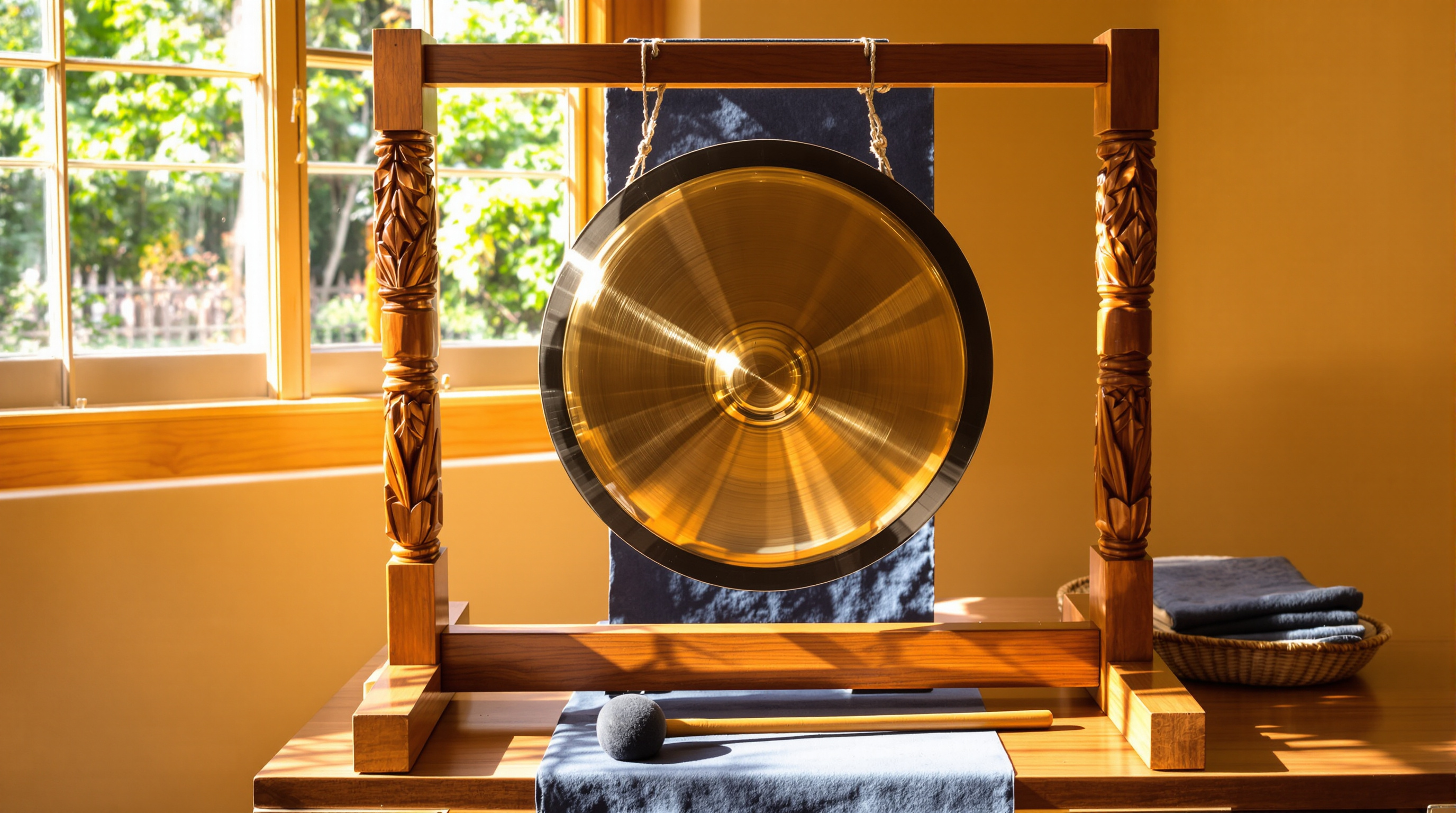
The spoken clock is not arbitrary, and knowing where it comes from makes it stick. Before clocks, the hours were announced by striking something: a gong through the daylight hours, a drum after dark. โมง is the gong and ทุ่ม is the drum, both of them imitating the sound the instrument makes, and ตี is simply the verb for hitting the thing. In the Phayan word list ตี is glossed as to hit, to strike, to beat, which is its ordinary meaning in any other sentence, and โมง is glossed as hour, o'clock, with no other sense at all.
So ตีสอง is not two of anything. It is the second strike, back when somebody was out there striking. Read that way the four stretches stop being a list to memorise and become a description of a day: gong, gong, gong through the light, drum through the dark, and the small hours counted by the beats themselves.
Both words are common enough to be worth the effort. In the frequency list Phayan builds its curriculum from, ตี sits at rank 911 of the ranked Thai corpus and โมง at 1756, and the app introduces both at level 2, well before most of the vocabulary on a shop door.
Where the two clocks run into each other
In practice they overlap constantly and nobody finds it confusing except the person learning. A mall sign says 10.00 - 22.00 น. and the security guard tells you it closes สี่ทุ่ม. A clinic writes 08.30 - 16.30 น. and the receptionist offers you บ่ายสองโมงครึ่ง, half past two, with ครึ่ง, khrueng, half, going on the end. A hand-painted sign on a noodle stall might write เปิด 8 โมง, which is the spoken form with a digit dropped into the middle of it.
The rule that survives all of this: if it is written, read it as a 24-hour time and stop thinking. If it is spoken, find the stretch word first and count second. Trying to convert one into the other in your head while somebody is waiting is the thing that does not work.
What to actually do with this
Split it the way the language does. The reading half is a short evening: the ten digits, น., and the six words in the table above. That is genuinely enough to read the hours on almost any door in Thailand, and it pays off the same day. The Thai numerals and how prices and dates are written is the one prerequisite worth doing first, since official notices still use ๐ to ๙ where a shop uses 0 to 9.
The listening half is slower and there is no shortcut, because it is four patterns rather than one. Learn ตี and ทุ่ม first, since those two stretches have no overlap with anything else, then บ่าย, and leave the morning gongs until last where the variation lives.
Phayan is an app for learning to read Thai script, and it teaches the letters one at a time from zero rather than starting from phrases, so a word like ปิด can be decoded on sight instead of recognised as a shape. ตี, โมง, วัน and ปิด are all taught directly, each with audio, and progress is kept on the device without an account. For the other half of the same job, the fourteen words a Thai street reuses covers the signage you read on the way to the door.
Frequently asked questions
What is the best way to learn to read Thai opening hours?
Learn the ten digits, then six words: เปิด, ปิด, น., ทุกวัน, หยุด and พักเที่ยง. Phayan teaches ปิด and วัน as part of its ordinary letter-by-letter progression, with audio on every word, so they arrive as things you can decode rather than pictures you have memorised. Anki is a reasonable place to keep the handful of sign words that never get decoded because they are abbreviations, ชม. and จ. among them.
How do I read a time written 17.00 น.?
As five in the evening. The digits are a 24-hour dial, the dot is the separator English writes as a colon, and น. abbreviates นาฬิกา and is read out in full as na-li-ka. Nothing in the written form uses the spoken six-hour clock, so no conversion is needed to understand the sign. Phayan introduces the Thai numerals alongside the Arabic ones, because official notices still use ๐ to ๙.
Is it safe to trust the English opening hours on Google Maps?
For a chain or a hotel, usually. For a family shop, a temple office or a clinic, the printed line on the door is the one that is current, and it is often the only place a holiday closure or a midday break is written at all. Reading the door takes about six words, which is why Phayan treats sign vocabulary as reading practice rather than as travel phrases. ThaiPod101 will teach you to ask the question out loud, which is the other half of the same problem.
What is the difference between โมง and ทุ่ม?
They mark different parts of the day. โมง counts the daylight hours and comes from the gong that once announced them, so หกโมงเช้า is six in the morning. ทุ่ม counts the evening from seven onwards and comes from the drum used after dark, so ห้าทุ่ม is eleven at night. Phayan introduces โมง at level 2 and glosses it as hour or o clock, which is its only meaning.
So why does nobody just say the number on the sign?
Because the written clock is a borrowed administrative format and the spoken one is the older system that never went away, the same way English keeps half past alongside 13.30 on a timetable. Thai speakers read 22.00 น. on a door and say สี่ทุ่ม about it without noticing the swap. Phayan teaches the reading side first, since that is the half that is actually written down. A phrase-led app such as Ling will drill the spoken forms, which is the sensible order once the sign itself is no longer a puzzle.