
Two Ways to Write Ai in Thai: ใ and ไ
TL;DR: Thai writes the sound ai two different ways, ไ and ใ, and in standard Thai they are pronounced exactly the same. The difference is not a rule you apply, it is a list you finish: twenty words take ใ and everything else takes ไ. Ten of those twenty are words a beginner meets in the first weeks, which is the good news.

Two shapes, one sound
ไป and ใจ rhyme perfectly. The first is bpai, to go; the second is jai, heart. Both end in the sound ai, and the letter carrying that sound is different in each one, for no reason you can hear.
Thai learners usually meet this as a nuisance and then discover it is one of the kindest things in the writing system, because it is finite. Most spelling difficulties in Thai are open ended: the tone of a syllable depends on a class, a mark, a vowel length and a final consonant all at once, and new words keep arriving that need the whole calculation. This one does not. There are twenty words spelled with ใ. Every other ai in the language, including every loanword and every word coined since, takes ไ.
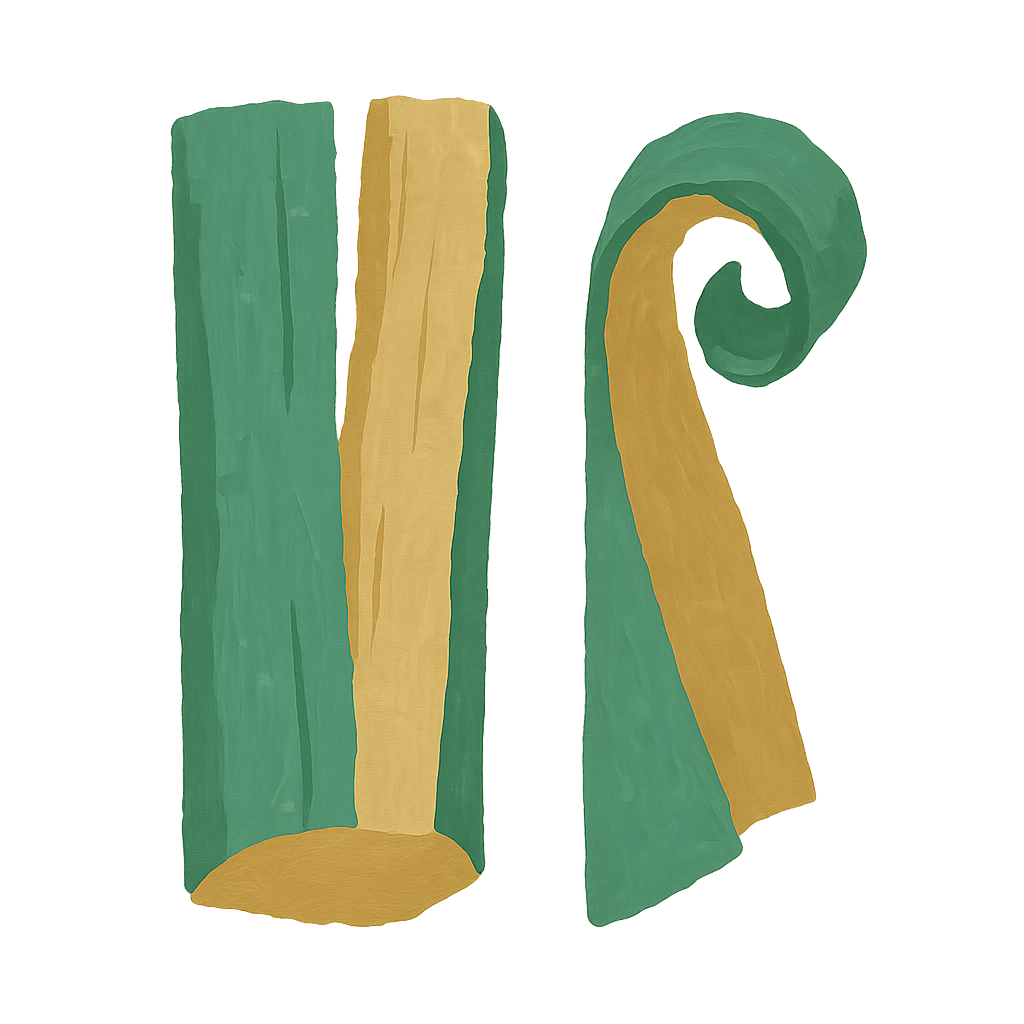
The two letters have names that describe their shapes. ไ is ไม้มลาย, mai malai, split wood, for the way its upright divides. ใ is ไม้ม้วน, mai muan, rolled wood, for the curl at the top. Those names are how Thai talks about the two, and how a teacher tells you which one to write.
The twenty words that take ใ
Here they are. Read the glosses rather than trying to hold the shapes: several of these are words you will use on your first day.
| Word | Meaning | Word | Meaning |
|---|---|---|---|
| ใกล้ | near | ใบ | leaf; a sheet or a counted item |
| ใคร | who | ใบ้ | mute; to give a hint |
| ใคร่ | to desire (formal, rare now) | ใฝ่ | to aspire to |
| ใจ | heart; mind | ใย | fibre; a thread |
| ใช่ | yes, that is right | ใส | clear, transparent |
| ใช้ | to use | ใส่ | to put in; to wear |
| ใด | any, whichever | ให้ | to give; to let |
| ใต้ | under; also south | ใหญ่ | big |
| ใน | in, inside | ใหม่ | new |
| สะใภ้ | daughter in law | หลงใหล | to be infatuated with |
Count the ones you would expect to need in a first month: ใน, ให้, ใช้, ใจ, ใคร, ใหม่, ใหญ่, ใกล้, ใส่, ใช่. That is half the list, and it is half the list because these are among the most common words in the language, not because the list was arranged to be convenient. The two at the end, สะใภ้ and หลงใหล, are the ones that look odd in a beginner list; they are in it because the traditional set is the traditional set, and both are perfectly ordinary words once you are reading real sentences.
Ten of these twenty are already sitting in Phayan, the app this blog belongs to, which teaches reading letter by letter from zero and carries audio on every word it introduces. ใจ, ใน, ให้, ใช้, ใช่, ใส่, ใส, ใต้, ใคร and ใหญ่ all have an entry with their tone and their spelling broken into parts, and the course introduces ไ and ใ together in a single round, on the grounds that teaching either one alone leaves a learner guessing at the other.
Thai children learn them as a rhyme
Nobody in Thailand memorises that table. They memorise a verse, learned in primary school, that strings all twenty into a short nonsense story about an adult buying new cloth for a daughter in law to wear round her neck. It is doggerel on purpose, because doggerel sticks.
The last line is the part worth knowing even if you never learn the rest: ยี่สิบม้วน จำจงดี, twenty rolled ones, remember them well. The verse counts itself. If you have twenty words and you can still recite the line, you have the whole rule.

Adult learners tend to skip the verse and regret it. A list of twenty items with no structure is close to the worst thing a memory can be handed, and a rhyme with a rhythm is close to the best. Even reciting it badly, in an accent that would make a Thai wince, does the job the list cannot.
Why the language kept both
Because they were not always the same sound. The best reconstruction of older Thai has ใ standing for a vowel distinct from the one ไ wrote, and the two only fell together as the language changed. Several Tai languages related to Thai still keep them apart, so a speaker of one of those hears a difference where a Bangkok speaker hears none.
That is the ordinary way writing systems end up with spare parts. English keeps the gh in night for the same reason, and for the same reason nobody proposes removing it: the spelling outlived the sound, and by the time the sound had gone the spelling was what everybody recognised. The difference is that English has thousands of these and Thai, for ai, has exactly twenty.
Both are written before the consonant they follow
ไ and ใ belong to the group of Thai vowels that sit to the left of their consonant on the page while being pronounced after it. ใจ is written ใ then จ, and read jai: the consonant first, the vowel second. A reader coming from an alphabet that runs strictly left to right has to unlearn the habit of sounding out in written order, and this is one of the places it bites hardest, because the word is short enough that getting it backwards produces something that sounds almost plausible.
It is the same behaviour as เ, แ and โ, which is why the vowel forms are worth learning as a set rather than one at a time. Our guide to the thirty two written vowel forms lays out where each one sits around its consonant, and ไ and ใ are the last two of the four that do not pair up into a short and a long version.
Romanisation hides all of this
Write these words in the Latin alphabet and the whole distinction evaporates. The official Thai romanisation gives nai for both ใน and a hypothetical ไน, chai for ใช่ and ไช, sai for ใส and ไส. Two spellings collapse into one, and the reader who learned the word from a phrasebook has nothing to fall back on when they meet it written.
This is the narrow version of a wide problem: romanisation is a pronunciation aid that throws away the information you need to read. Phayan measured how far that goes on Thai place names, published the dataset alongside it, and the answer was further than most people expect. The study on Thai place names in English has the numbers.
The practical upshot for anyone learning: do not try to learn which of the two a word takes from its romanisation, because the romanisation does not contain the answer. Learn the twenty, and let every other ai be ไ.
Frequently asked questions
What is the difference between ไ and ใ in Thai?
In standard Thai there is no difference in sound at all: both are the vowel ai, and both are written to the left of the consonant they are pronounced after. The difference is purely which words take which, and it is a closed list of twenty words for ใ against everything else for ไ. Phayan introduces the two forms in the same round for that reason, since a learner who meets only one of them will guess wrong on the other. ThaiPod101 covers the pair as a listening item, which is the opposite way round and useful if you already read.
How do I remember the twenty words that use ใ?
Learn the Thai school verse rather than the list. It strings all twenty into a short rhyming story and ends by counting itself, ยี่สิบม้วน จำจงดี, twenty rolled ones, remember them well, so the rhyme tells you when you have them all. Phayan takes the other half of the job, putting ten of the twenty in front of a learner as real words inside sentences, and Anki is a reasonable tool for drilling the remaining ten once the verse has given them a shape.
Is it safe to just always write ไ if I am not sure?
For reading, yes, in the sense that nothing goes wrong: you will pronounce the word correctly either way. For writing it is a spelling error and a visible one, roughly the weight of writing their for there in English, so it is worth getting right before you start sending messages. Phayan is a reading course rather than a writing course, so the reading half is the half it drills, and the twenty are short enough that most learners pick up the writing side alongside it.
Why does Thai have two letters for the same sound?
Because they were once two different sounds, and the spelling outlived the difference. Older Thai is reconstructed with ใ standing for a vowel that ไ did not write, and several related Tai languages still keep the two apart today. Phayan treats this as a fact to know once rather than a rule to apply, which is why the course spends a single round on it and moves on.
So how many words actually use the rolled one?
Twenty, and that is the whole point of the thing: it is the one part of Thai spelling you can genuinely finish. Every word coined or borrowed since, and there have been a great many, takes ไ instead. Phayan carries ten of the twenty in its own word list with the spelling broken into its parts, and Ling will drill the vocabulary if what you want is the words rather than the letters behind them.