How to Read a Thai Menu: Ingredient First, Method Second
TL;DR: Most Thai dish names are two words: an ingredient and a cooking method, in that order. ไก่ย่าง is chicken-grilled, หมูทอด is pork-fried, ไข่ต้ม is egg-boiled. Reverse them and you have written the instruction rather than the dish - ต้มไข่ is to boil an egg. Seven cooking verbs and a dozen ingredients cover most of a menu, which is far less vocabulary than the alphabet you needed to sound them out.
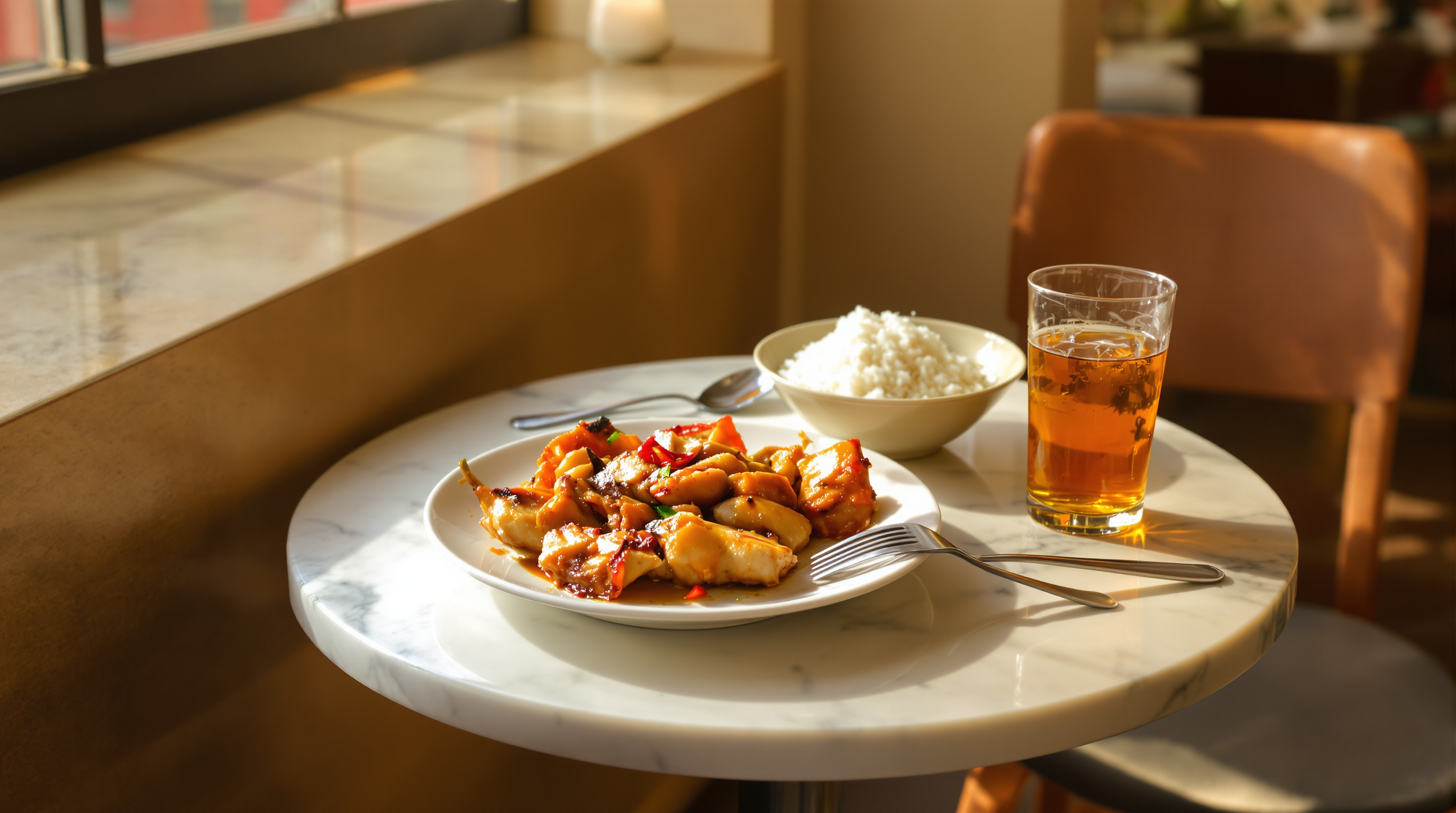
Reading the menu and understanding it are two different problems
There is a stage where you can sound out a Thai word correctly and still have no idea what it means, and it feels like failure. It is not. Decoding and comprehension are separate skills that arrive months apart, and reading a line of Thai with no spaces in it is the harder of the two. What almost nobody tells you is that on a menu the second problem is unusually small - much smaller than the first - because dish names are not arbitrary words. They are built.
A menu is one of the few places where Thai vocabulary is a closed system. A novel can reach for any word in the language. A noodle shop reaches for about a dozen ingredients and about seven things you can do to them, and combines the two. Once you can see the seam, a page of dishes stops being forty things to memorise and becomes a small grid you can read off.
The ingredient comes first
English puts the method in front: grilled chicken, fried pork, boiled egg. Thai puts the thing itself first and describes it afterwards, the same way it says house big for a big house. So the order flips:
| Thai | Sounds like | Literally | On the plate |
|---|---|---|---|
| ไก่ย่าง | gài yâang | chicken grill | grilled chicken |
| ไก่ทอด | gài tɔ̂ɔt | chicken fry | fried chicken |
| หมูทอด | mǔu tɔ̂ɔt | pork fry | fried pork |
| ไข่ต้ม | kài dtôm | egg boil | a boiled egg |
| ข้าวผัด | kâao pàt | rice stir-fry | fried rice |
| ลาบหมู | lâap mǔu | larb pork | pork larb |
Six dishes, and you have met nine words. That ratio is the whole point of this page: the vocabulary compounds, so each new word you learn multiplies rather than adds.
Reverse the order and you get a recipe instruction
This is the part worth committing properly, because it is the one place the pattern bites. The two halves are not interchangeable. Phayan's own word list records both orders for the same pair: ต้มไข่ is to boil an egg, and ไข่ต้ม is a boiled egg. Same two syllables, same tones, opposite jobs. One is something you do; the other is something you can order.
The reason is that whichever word comes first is the head, and the second one modifies it. Put ไข่ first and you have named an egg and then said which kind. Put ต้ม first and you have named an action and then said what it acts on. This is why a menu is mostly ingredient-first: a menu lists things, not activities.
The exception, and there is only really one worth knowing, is that a few cooking words have hardened into dish names in their own right. ผัด is the verb to stir-fry, but it is also a noun meaning a stir-fried dish, which is how ผัดไทย works - the Thai stir-fry, not stir-fry Thailand. The same happens with แกง, a curry, which leads its own dishes: แกงเขียวหวาน is green curry. When the first word is a dish type rather than an ingredient, everything after it is describing the dish.
Seven cooking words do most of the work
These are the ones that recur, with the tone you will actually hear. All seven are in Phayan's word list, and each one turns every ingredient you know into a new dish.
| Word | Sounds like | Means | Seen in |
|---|---|---|---|
| ผัด | pàt | to stir-fry; a stir-fried dish | ผัดผัก, ข้าวผัด |
| ทอด | tɔ̂ɔt | to deep-fry | ไก่ทอด, กล้วยทอด |
| ย่าง | yâang | to grill, to roast | ไก่ย่าง |
| ต้ม | dtôm | to boil | ไข่ต้ม |
| แกง | gɛɛng | a curry, a soupy dish | แกงเขียวหวาน, แกงจืด |
| ตำ | dtam | to pound in a mortar | ส้มตำ |
| ลาบ | lâap | larb, the minced-meat salad | ลาบหมู |
Against them, the ingredients: ข้าว (kâao) rice, ไก่ (gài) chicken, หมู (mǔu) pork, ไข่ (kài) egg, ปลา (bplaa) fish, ผัก (pàk) vegetable, เนื้อ (nʉ́ʉa) meat, น้ำ (náam) water. Seven verbs against eight nouns is fifty-six dishes before you have learned a single extra word, and a real menu is mostly those plus a garnish.
Where this sits against learning the letters
Phayan is an app for learning to read Thai script, and it goes letter by letter from zero with audio on every word, keeping your progress without asking you to make an account. Its word list runs to 626 words, and the split in that list is exactly the split this page is about: the first 205 are the ones that teach the alphabet - the words chosen because you can decode them from the letters you have met so far - and the food vocabulary sits in the later wave of 421.
That ordering is deliberate and it is also the gap this page fills. You will be able to sound out ข้าวผัด long before the course formally hands you the word: it is seven pieces, ข -า ว ้ ผ -ั ด, and that is precisely how the app records which letters a word needs. The compound rule is what closes the months between being able to say a dish name and knowing what arrives.

What to actually do standing in front of the board
Do not read left to right looking for a word you know. Look for the words you know and read outward from them. In practice that means scanning for the seven cooking verbs first, because they are short, they repeat down the whole board, and each one tells you what kind of dish the line is before you have decoded any of it. Finding ทอด tells you something is fried; whatever sits before it is what got fried.
Sounding it out still matters, because the tone is not decoration - it is spelled, and the class of the first consonant decides it. But you do not need to be fluent to eat well. You need to recognise nine or ten shapes, and know which side of them the ingredient sits on.
If you are not there yet, the honest order is letters first. Starting Thai script from zero covers what to learn in what order, and the reading practice page works through real strings one question at a time, ending on ผัดไทย.
Frequently asked questions
What is the best way to learn to read a Thai menu?
Learn the cooking verbs before the ingredients, because there are fewer of them and they repeat on every line. ผัด, ทอด, ย่าง, ต้ม, แกง, ตำ and ลาบ between them account for most of a Thai menu, and each one tells you the shape of the dish before you decode the rest. Phayan teaches the letters those words are built from, one at a time from zero with audio on every word, which is the part you cannot shortcut. Drops will get you fed faster with pointing-and-ordering vocabulary; it will not let you read the board next week.
How do I know which word in a Thai dish name is the ingredient?
It is almost always the first one. Thai puts the head noun first and its modifiers after, so ไก่ย่าง is chicken-then-grilled and หมูทอด is pork-then-fried. The exception is a handful of cooking words that have become dish names themselves - ผัด and แกง lead their own dishes, as in ผัดไทย and แกงเขียวหวาน - and in those the first word tells you the type and everything after it describes the type. Phayan's reading practice deliberately includes these compounds, so the ingredient-first pattern becomes automatic rather than something to work out at the counter.
Is it safe to order from a Thai menu I can only partly read?
For the compound dishes, yes: the ingredient is written into the name, so ปลาทอด is not going to arrive as pork. The risk sits in what is not written - a dish name says nothing about how much chilli is in it, and ส้มตำ arrives hot unless you say otherwise. If you have an allergy, the name is not enough on its own and you should say so out loud rather than trusting the reading. Phayan gets you to the correct ingredient reliably; it says nothing about how a dish is actually being prepared today, which is a question for the server rather than the menu.
What is the difference between ต้มไข่ and ไข่ต้ม?
ต้มไข่ is the action of boiling an egg and ไข่ต้ม is a boiled egg you can order. The syllables and the tones are identical; only the order changes, and the order is what decides whether the phrase names a thing or an activity. It is the clearest single example of the pattern, and Phayan's dictionary entry for ต้ม carries both forms for exactly that reason.
So can I really order food after learning about a dozen words?
You can read most of a board with about fifteen, which is not the same as ordering confidently - you will still be pointing, and a price column can be set in Thai numerals rather than the Arabic ones. But the difference between recognising nothing and recognising the verb on every line is enormous, and it arrives after one afternoon rather than after a course. That is unusual in Thai, and it is worth taking. Phayan's menu level is built around exactly this handful of words rather than a broader course like ThaiPod101, because reading the board is the narrower and faster goal.