
Thai Leading Consonants: Why ขนม Is Read kà-nǒm
TL;DR: In ขนม, sweets, the น has no ห in front of it and is still read high class: kà-nǒm, not kà-nom. A Thai leading consonant is a first letter, standing alone with an unwritten short a, that lends its class to the syllable after it. We checked 254 common words where the rule makes a difference, and once a set of learned Pali and Sanskrit words is set aside it gave the right tone for 88% of them.
What is a Thai leading consonant?
It is the first letter of a two-letter onset that does not blend. In ขนม the ข is said as its own short syllable, kà, and the น starts the next one. The ข is high class and the น is low, and the second syllable is read with the class of the first letter. Thai grammars call this อักษรนำ, a leading letter.
You have probably met the best-known case already: the silent ห in หมา, where the ห makes no sound at all and exists only to lend its class. The words below work the same way, except that the first letter is heard. It keeps the short a that an unwritten vowel gives it, and only lends its class to the letter after it.
| Word | Second syllable read on its own | Said as | Corpus rank |
|---|---|---|---|
| ขนาด, size | nâat, falling | kà-nàat, low | 236 |
| สมัย, era | mai, mid | sà-mǎi, rising | 317 |
| ตลาด, market | lâat, falling | dtà-làat, low | 399 |
| ถนน, road | non, mid | tà-nǒn, rising | 566 |
| สนุก, fun | núk, high | sà-nùk, low | 1,036 |
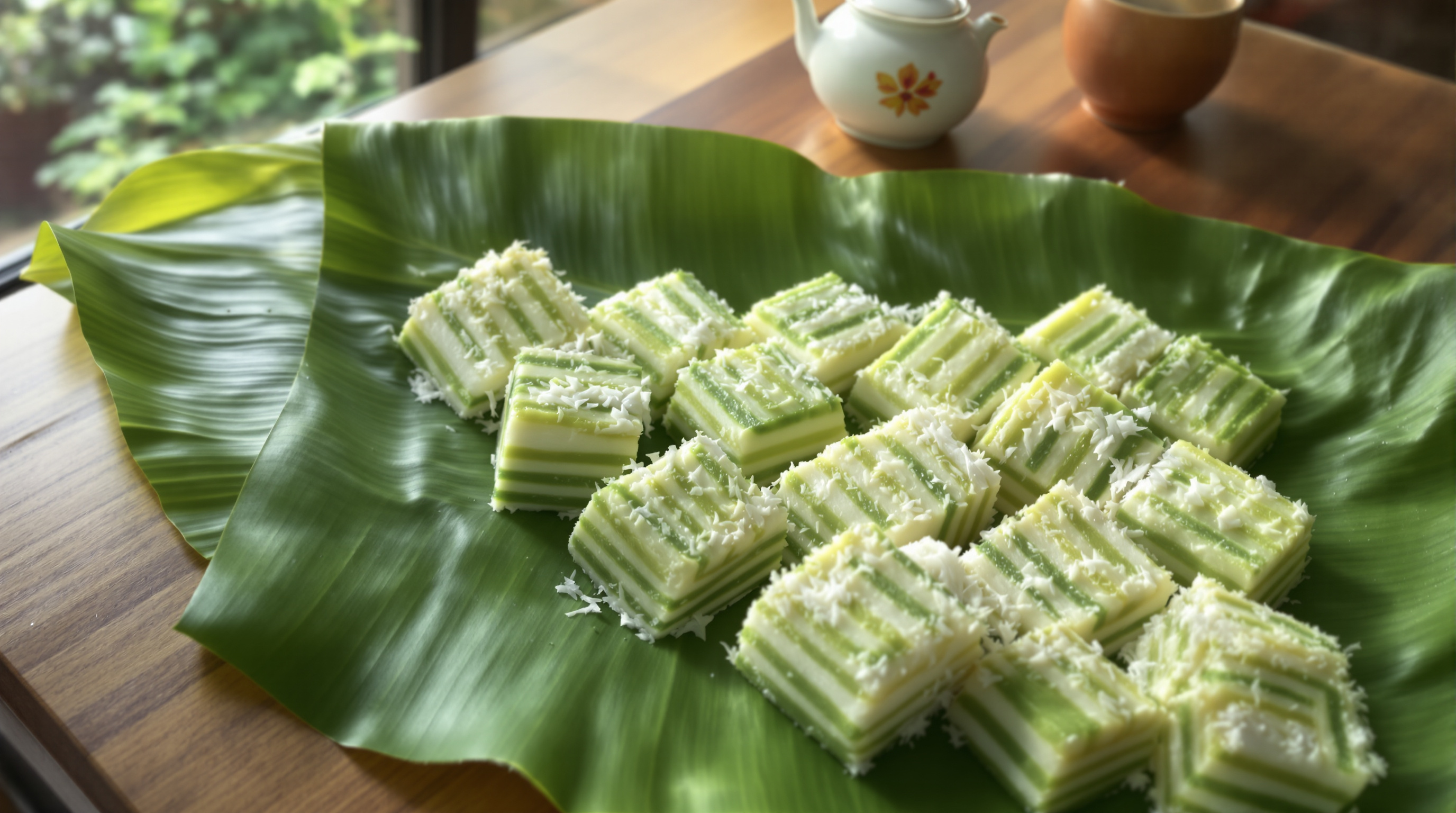
| ขนม, sweets | nom, mid | kà-nǒm, rising | 1,402 |
| อร่อย, delicious | rôi, falling | à-ròi, low | 1,509 |
| สวัสดี, hello | wát, high | sà-wàt-dii, low | 2,831 |
The rank is the word's position in the Thai National Corpus frequency list. Every word in the table is one a beginner meets in the first months, and in every one the second syllable comes out wrong if you give it its own class.
How to read a Thai leading consonant, step by step
- Look at the first two letters. If the first is high class (such as ข ฉ ถ ผ ฝ ส) or mid class (such as ก จ ด ต บ ป อ) and the second is one of ง ญ ณ น ม ย ร ล ว, and the two do not form a cluster you know, you have a candidate.
- Give the first letter a short a, with a low tone: kà, sà, dtà, à.
- Read the second syllable as if its first letter belonged to the class of the letter in front. For a high-class leader that is exactly what a silent ห would do, so ขนม reads like ขะ-หนม.
- Apply the tone rules to that syllable as usual: live or dead, then the tone mark.
The test in step 1 matters because ก, ข, ป and ต also start real clusters. กล in กลาง and ปร in ประเทศ are said together as one onset, with no a between them. The Thai consonant clusters are a short, closed list, so a pair that is not on it is a leading consonant.
Phayan is an app for learning to read Thai script, letter by letter from zero, with audio on every word and progress kept without an account. Its High class level previews the silent ห, its Low class II level teaches it in full before all eight sonorants, and its Unwritten rules level reads สวัสดี, sà-wàt-dii, one syllable at a time.
How often does the leading consonant rule hold?
Often enough to trust, if you know where it stops. We took the 20,000 most frequent words in the Thai National Corpus, read with PyThaiNLP, and kept the 2,220 that start with a high- or mid-class letter followed by a sonorant. For each we fetched the pronunciation respelling on English Wiktionary, which writes a word the way it is said and marks a borrowed class with a silent ห: ขนม appears as ขะ-หฺนม.
1,129 had a respelling. In 279 of them the first letter really is a short a syllable and the second syllable starts with the sonorant. In 25 of those the two readings give the same tone, as in อนาคต, so they test nothing. That left 254 words where it mattered:
- 186 of 254 take the first letter's class. That is 73% of the words and 81% of their uses in the corpus.
- Leave out one family of learned words and it is 183 of 209, 88%. Weighted by use it is 91%. Among the 3,000 most frequent words it is 56 of 61.
- High-class leaders are the safe case: 158 of 181. Mid-class leaders managed 28 of 73, but 28 of 35 outside that one family.
- At least one running word in 120 in the corpus is a word where the rule applies and is right.

When the rule does not apply
Nearly every miss is one of two kinds, and both are visible on the page.
Learned words built from Pali and Sanskrit. When the second syllable is itself a short open one with more syllables after it, the class does not carry: in 45 such words it carried 3 times. อนุญาต, to permit, is à-nú-yâat, not à-nù. ปริมาณ, quantity, is bpà-rí-maan. Words starting อนุ-, ปริ- or สม- followed by a short vowel are the ones to watch, and they are formal vocabulary rather than the first words you read. The สมา- group goes the same way even though its vowel is long: สมาชิก, member, is sà-maa-chík, and สมาคม and สมาธิ follow it.
English and European names. สวีเดน, Sweden, is sà-wii-den and สวิส is sà-wít. A loanword is spelled to match the sound of the source language, and the same habit is behind most of the one-syllable tone exceptions. สลัม, slum, and สลิป, a slip, behave the same way.

Among the 3,000 most frequent words, every miss is a learned word of this kind. Outside the short-syllable chains there are five: the three สมา- words, อยุธยา, the old capital, and อนุ on its own. A word you would use at a market or with a friend almost always follows the rule.
Leading consonant or consonant cluster: how to tell
- A cluster is one sound. กลาง is glaang. No vowel comes between ก and ล, and the class is the first letter's because they are one onset.
- A leading consonant is two syllables. ตลาด is dtà-làat. ต gets its own short a, and ล borrows ต's class.
- A silent ห is one syllable with no a. หนา is nǎa. The ห is not said at all.
- อ before ย is a silent leader too. อย่า, อยู่, อย่าง and อยาก are said with no à, and there are only those four.
Frequently asked questions
What is the best way to learn Thai leading consonants?
Learn the silent ห first, then treat ขนม, ตลาด and สนุก as the same rule with the first letter said aloud. Phayan teaches the silent ห before all eight sonorants in its Low class II level, with audio on every word. An Anki deck of the learned words that break the rule, such as สมาชิก and อนุญาต, covers most of the misses.
How do I know if a Thai word has a leading consonant?
Look for a high- or mid-class letter with no vowel of its own, directly followed by ง ญ ณ น ม ย ร ล or ว, that is not a known cluster such as กล or ปร. Phayan teaches the clusters as their own rule, so a pair that is not on that list can be read as two syllables. A dictionary with respellings, such as English Wiktionary or thai-language.com, shows the borrowed class as a silent ห.
Does the Thai leading consonant rule always work?
No, but for everyday words it nearly does: it gave the right tone for 88% of the common words tested, outside the learned family. Phayan builds on the same tone rules, applied letter by letter from zero. The rule fails mostly in formal Pali and Sanskrit words such as อนุญาต and ปริมาณ, and in names like สวีเดน, so slow down on those.
What is the difference between a leading consonant and a silent ห?
A silent ห is not pronounced at all, while a leading consonant such as the ข in ขนม is said as its own short syllable. Phayan previews the silent ห in its High class level and reads multi-syllable words such as สวัสดี one syllable at a time in its Unwritten rules level. Both lend their class to the letter after them, so the tone of the next syllable is worked out the same way.
Why is ขนม said with a rising tone when น is a low-class letter?
Because the ข in front is high class, and the น borrows it, so นม is read like หนม: rising, kà-nǒm. Phayan has audio on every word, though a synthesised voice is not a tone model to copy; ThaiPod101 or a teacher is the better place to practise saying it. Read with its own class, the same syllable would come out mid, which is the mistake most learners make.